
Philippine Investment Brochure
The Philippine Statistics Authority states that the country’s gross domestic product (GDP) grew to 7.2 percent in the fourth quarter of 2022, resulting in a 7.6 percent full-year growth in 2022.
The PSA press release states that the main contributors to the fourth quarter 2022 growth were: Wholesale and retail trade; repair of motor vehicles and motorcycles, 8.7 percent; Financial and insurance activities, 9.8 percent; and Manufacturing, 4.2 percent. For annual 2022, the industries which contributed the most to the annual growth were: Wholesale and retail trade; repair of motor vehicles and motorcycles, 8.7 percent; Manufacturing, 5.0 percent; and Construction, 12.7 percent.
Among the major economic sectors, Industry and Services posted positive growths in the fourth quarter of 2022 with 4.8 percent and 9.8 percent, respectively. Meanwhile, Agriculture, forestry, and fishing (AFF) posted a contraction of -0.3 percent. On an annual basis, AFF, Industry, and Services all posted positive growths with 0.5 percent, 6.7 percent, and 9.2 percent, respectively.
The Gross National Income (GNI) grew by 9.3 percent in the fourth quarter of 2022 and 9.9 percent for full-year 2022.
The Philippine government promotes partnership with the private sector to enable and enhance the latter’s participation in developing infrastructure and services in the country. It has adopted the innovative build–operate–transfer (BOT) scheme, a model now being followed by other countries due to its success.
The country has opened its economy by allowing 100% foreign ownership in almost all sectors. It has strengthened its capital markets and has deregulated banking, insurance, and the shipping and telecommunication sectors, therefore removing most, if not all of the monopoly structures in the Philippine market economy.
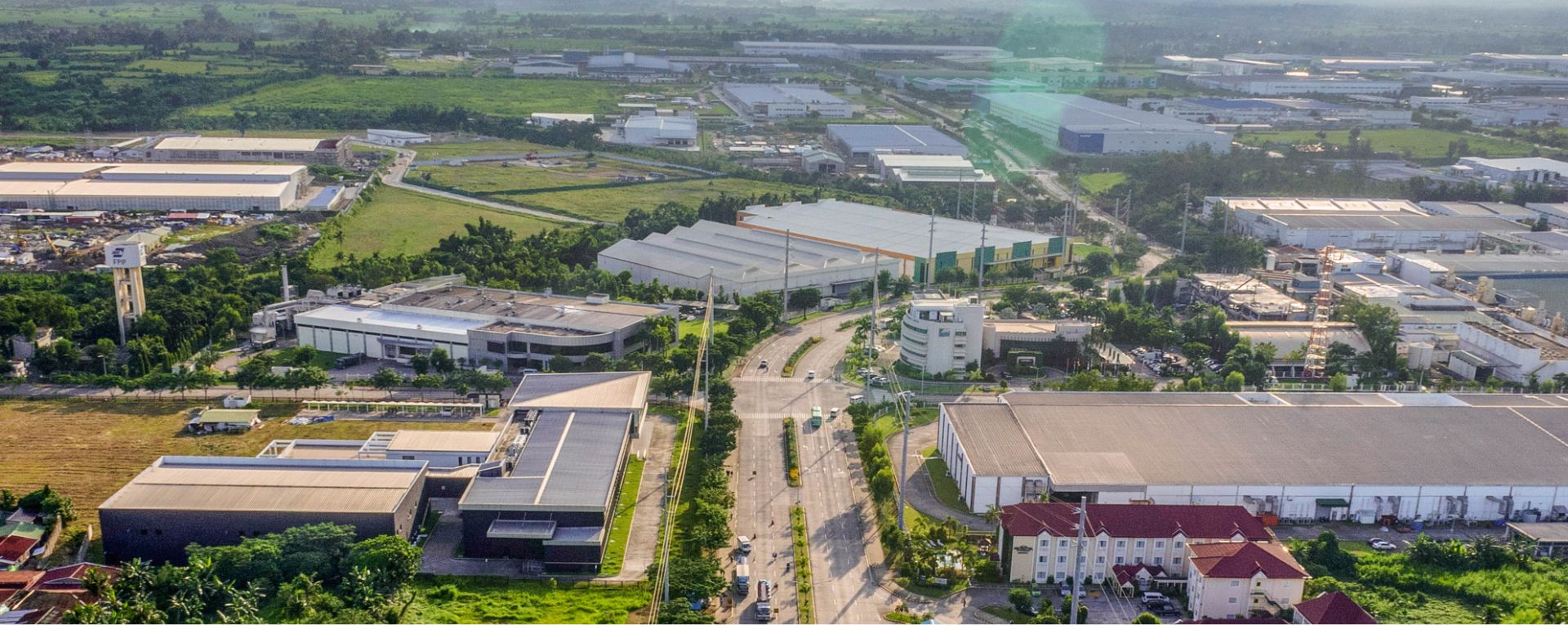
Attractive incentive packages are available to qualified enterprises in the country’s numerous Special Economic Zones and Industrial Estates. The Special Economic Zones have become balanced hubs of agricultural, industrial, and recreational activity.
The Philippines is the most strategic location for firms that aspire to gain access to the large ASEAN market. It has complied with WTO, APEC, and AFTA agreements and has reduced tariff rates on manufactured goods. The Philippines has enhanced and primed up various areas of business for investors and offers a dynamic consumer market accustomed to an array of product choices created by a competitive domestic economy.
The Philippines offers state-of-the-art telecommunications facilities and an adequate uninterrupted power supply. Specialized IT zones offer ready-to-occupy offices and production facilities, computer security and building monitoring systems, as well as complete office services.
In the Philippines, a minimum wage earner receives a monthly pay ranging from US$169.99 to US$287.24 depending on which area or region the worker is employed. Indonesia (US$90.71 to US$227.55) and Vietnam (US$143.20 to US$161.74), on the other hand, provides a monthly minimum wage lower than the Philippines.
The Philippines is powered by its vast talent pool of young, skilled, and English-speaking workforce. The median age of population is 25 years while the labor force participation rate in the country was placed at 64.6% as of May 2021, equivalent to 48.45 million individuals.
The Philippines has one of the highest literacy rates in the Association of Southeast Asian Nations (ASEAN) region with about 91.6% Filipinos 10 to 64 years functionally literate in 2019. It has highly qualified managers, information technology staff, and engineers. About 94% of the population is capable of being trained for essential skills and competencies.
The Philippines has one of the highest literacy rates in the region, with 93.9% of the population capable of being trained for essential skills and competencies. The country’s unique edge comes from the high level of English proficiency of Filipinos. The Philippines is the third-largest English-speaking country in the world and the top-ranked country in the world for Business English.
Even after the time of the COVID-19 global pandemic, the country has been benefitting from the reforms enacted and already implemented (e.g., Rice Tariffication Law, Sin Tax Reform Law, Ease of Doing Business and Efficient Government Service Delivery Act, Tax Reform for Acceleration and Inclusion, Telecommuting Act, Social Security Act of 2018, Balik Scientist Act, etc.).
The Philippines was on track to becoming an upper middle-income economy, until the coronavirus disease 2019 (COVID-19) pandemic disrupted the country’s economic growth momentum and development trajectory. The unprecedented challenges brought by the pandemic prompted a shift in sourcing and utilizing Official Development Assistance (ODA) financing in the new normal, from project-specific to quick-disbursing program loans.
The Regional Comprehensive Economic Partnership (RCEP) is an agreement between the member states of the Association of Southeast Asian Nations (ASEAN) and its free trade agreement (FTA) partners. The pact aims to create an integrated market with 16 countries, making it easier for the participating countries to commence trade of products and services. In summary, the RCEP aims to lower tariffs, open up trade in services and promote investments, and reduce costs for companies by allowing them to export a product within participating countries without meeting separate requirements for each country. The Philippine’s participation in the RCEP is seen to be beneficial to business owners and investors in multiple ways. First, the manufacturers in the country can get cheaper imported goods, raw materials, and other products from other member countries of the RCEP. Second, it will be convenient to do business as the RCEP simplified the rules for businesses and investors. Third, in the RCEP region, participating countries will have uniform rules for protecting intellectual property rights. Lastly, the RCEP will complement the ongoing reforms and existing programs and initiatives of the government, especially on the resurgence of the manufacturing sector in the country.
The Philippines remains as an emerging market for Foreign Direct Investments (FDIs). FDIs in the Philippines have grown significantly in the past few years and have remained steady despite the unfortunate effects of the COVID-19 pandemic. Despite the decreasing global trend in FDI flows in 2020, the Philippines was able to counter the trend gaining 29% increase in FDIs with the approved foreign investments in the country reaching a total of Php36.5 billion in the fourth quarter of 2020. Total approved foreign investments in the second quarter of 2021 reached Php 22.5 billion, 45% higher compared with the Php 15.46 billion in the same quarter in 2020.
Majority of the country’s approved foreign investments (FIs) were pledges from six investment promotion agencies (IPAs) named the Board of Investments (BOI), Philippine Economic Zone Authority (PEZA), Clark Development Corporation (CDC), Subic bay Metropolitan Authority (SBMA), Authority of the Freeport Area of Bataan (AFAB), and Cagayan Economic Zone Authority (CEZA).
Information and Communication industry bested all other industries as it stands to receive PhP 12.53 billion or 55.7% of the total FI pledges. Construction came in second with investment commitments valued at PhP 3.62 billion or 16.1% share, followed by Manufacturing with PhP 2.27 billion or 10.1% FI contribution.
Based on research by Statista.com, in 2020, the highest approved investment value among the leading industries by the Board of Investments of the Philippines was the construction and infrastructure sector, amounting to approximately 557.3 billion Philippine pesos. The electricity, gas, steam, and air cooling supply industry followed with about 200.7 billion Philippine pesos of investments.
